Richmond winters are mild compared with places farther north. Some years we get a couple of real snows, some years barely any. But every time snow or ice is in the forecast, the roads get treated, and that treatment is what you need to think about, not the snow.
What’s on the road
Before a storm, road crews spray a salt brine on highways and main roads so ice doesn’t bond to the pavement. During and after, they spread rock salt and sand. Drive on those roads and your car picks up a film of salty water and grit, mostly on the lower half.
Salt by itself doesn’t do much. Salt plus moisture plus time is what speeds up rust. It sits in the places that stay damp longest: wheel wells, the rocker panels under the doors, the bottom edges of the doors and tailgate, brake lines and the exhaust.
When to wash
Not during the storm. If the roads are still wet with brine, the car will be covered again by the time you get home.
The right time is once the roads have dried out, ideally within a week or so. Pick a day above freezing. Midday on a sunny day in the 40s is plenty warm for a hand wash. Below freezing, water freezes on the paint and in the door seals, which is how people end up with doors they can’t open the next morning.
What to focus on
- Wheel wells and lower panels. That’s where most of the salt is. Rinse them well.
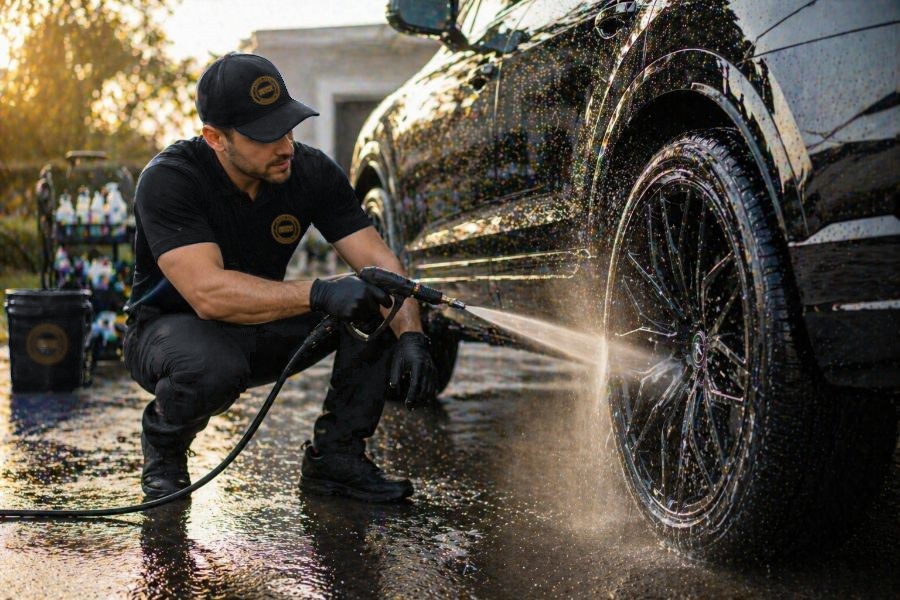
- Wheels. Salt and brake dust together are tough on wheel finishes.
- Door jambs and the bottom of the doors. Salty slush gets in there every time you open a door.
- Floor mats and carpet. Those white salt lines on the carpet come from snowy boots. Vacuum first, then spot clean. Rubber mats should come out and get scrubbed.
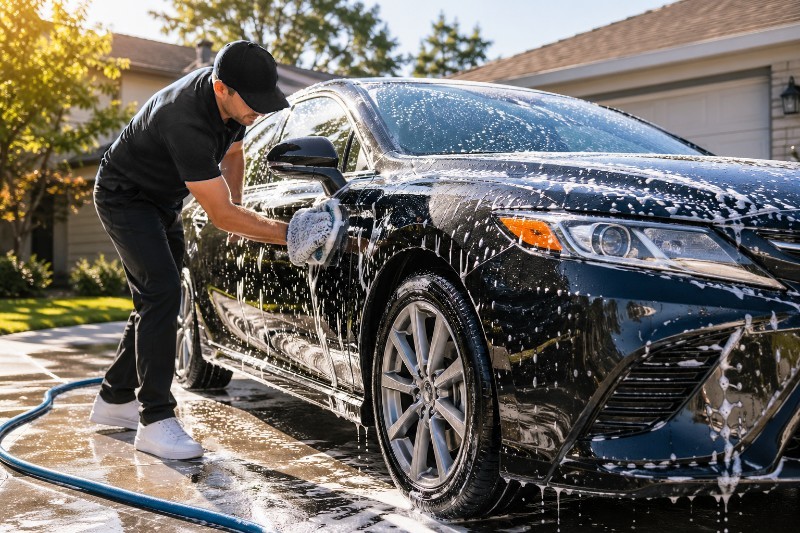
Our exterior hand wash covers the wheels, tires and paint, and you can ask us to give the wheel wells and lower panels extra attention. If the salt lines are inside too, a full detail takes care of both.
What a touchless wash is good for
Honestly? A touchless automatic wash is fine for a quick salt rinse in the middle of winter. It won’t get the car truly clean, and the chemicals are on the harsh side, but it’s better than leaving salt on for weeks. Just skip the brush washes. That’s where swirl marks come from.
One more thing
Cold weather drops tire pressure, roughly 1 PSI for every 10 degrees. That’s why the low-pressure light comes on during the first cold morning of the year. We check and top up tire pressure with every service, free, and top up the washer fluid too. You go through a lot of it in salty, slushy weather.